AI can write a flawless essay in seconds. Quilva records how the essay was actually written — evidence, not a probability score.
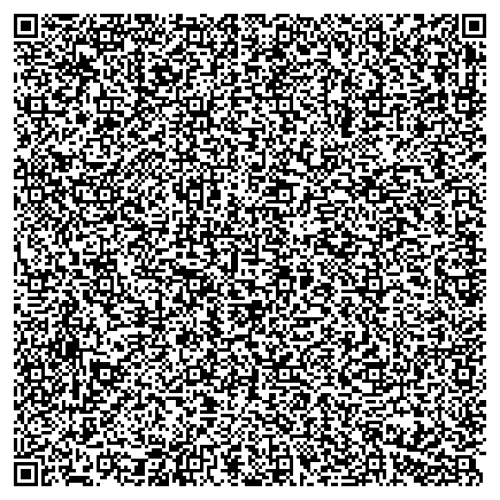
Scan this QR Code written by student Brandon Smith.
This was for a demo school assignment, "Do we live in a simulation?" Have a look at the insights and details the certificate gives regarding how the piece was actually written.
Students who use Quilva can choose to have a QR code generated and appended automatically to the end of all their written work.
Finished work carries a Human Authorship Certificate with its own QR code. Printed, emailed or on screen — point a phone at it and see how that work was produced.

Try scanning it — this is a real sample certificate.
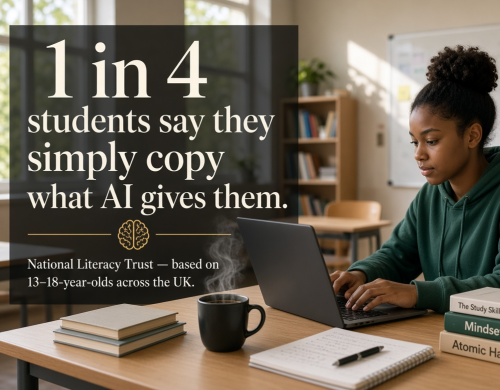
Generative AI writes polished academic work in seconds, and the finished document no longer tells your staff who produced it.
Detectors can only guess. They read the result and return a probability — one that can be wrong about a strong student, and one that AI can be prompted to slip past. Every new detector teaches the next model how to evade it. That race has no finish line.
Most also require student work to be uploaded to a third-party service, turning an integrity question into a data-protection one.
Quilva records the writing as it happens, on your own machines:

Quilva outperforms all online AI detectors that guess if writing was AI, using a fundamentally different approach.
| Typical AI detection | Quilva |
|---|---|
| Result Looks only at the finished piece of work. | Process Captures the journey — planning, notes, drafting, editing and the finished work. |
| Guesswork Estimates whether AI may have been used. Sometimes it is wrong. | Evidence Records what actually happened in the document as it was written. |
| Online Work may need uploading to an external service, creating privacy and data-security concerns. | Offline Verification happens locally. Student work stays on your systems. |
| General purpose Built to flag AI-generated content across any context. | Built for UK institutions Designed around authorship, assessment integrity, privacy and school guidance. |
JCQ requires centres to ensure that work submitted for assessment is the student's own. The DfE expects evidence, responsible use of technology, and protection of personal data.
We've gone through both in detail and built Quilva around what they actually ask for: everything happens locally, student work is never stored on Quilva's servers, and there is no generative AI, chatbot or writing assistant anywhere in the application — it's a digital typewriter with an evidence engine underneath it.

Built around JCQ and DfE guidance.
Quilva changes the incentive. Students can focus on producing their best work — stronger vocabulary, clearer arguments, better grammar, a more sophisticated style — without worrying that good writing might somehow make them look "AI-generated."
No student should ever have to make their writing worse just to avoid tripping an imperfect detector. When the process itself is the evidence, a well-turned sentence is simply a well-turned sentence.
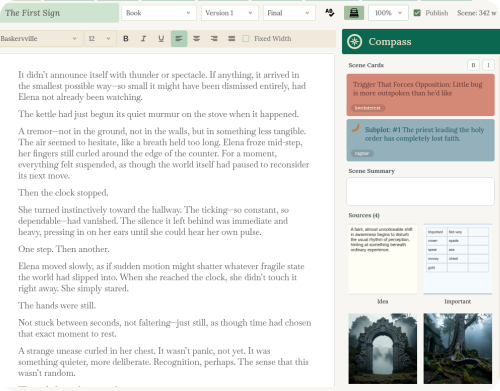
Students don't have to use any of it, but Quilva also gives them the planning and drafting tools professional authors and screenwriters rely on — outlining, mind mapping, index cards and research notes — to develop and organise ideas before turning them into a finished piece.

Writer & Compass — planning tools built in.
One subscription covers the whole school — every student, every device, every assessment they write. No per-seat maths, no procurement back-and-forth, and nobody left to figure it out alone: we'll guide your team through setup from day one.
Getting started is really easy. We'll walk your team through installation, setup, and usage.
Tell us how your institution handles assessment integrity today, and we'll tell you honestly whether Quilva helps.
No demo software to install first, and no sales visit. A short email or phone call is usually enough to work out whether this fits how you already work.
Happy to talk through pricing for departments, year groups or a whole institution.